
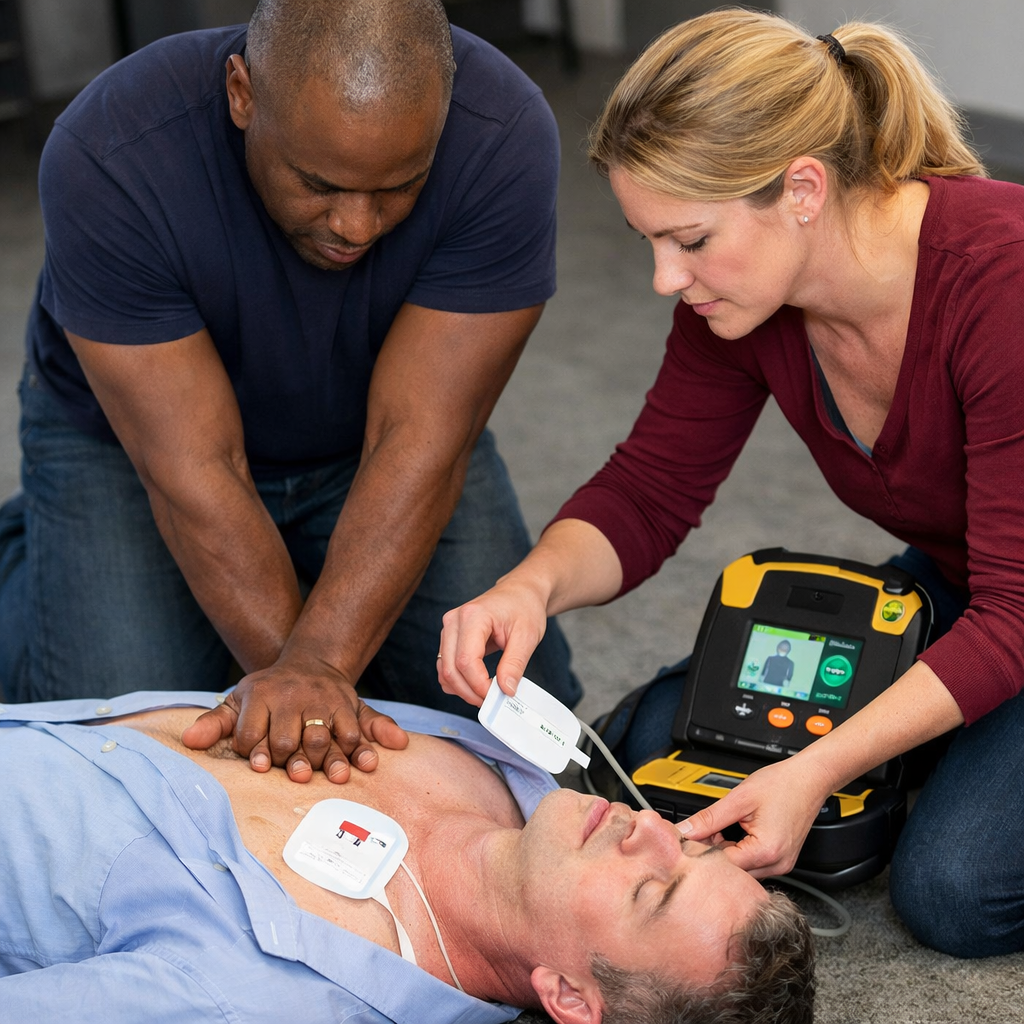
Women are, unfortunately, less likely to receive CPR from bystanders than men in public emergencies—and it’s a well-documented issue in medicine. Several factors contribute to this
1. Fear of causing harm or accusations
Some people hesitate to perform CPR on women because they’re worried about:
Touching the chest area inappropriately
Being accused of sexual misconduct
This hesitation can cost critical time in a cardiac arrest.
2. Misunderstanding of anatomy
There’s a misconception that CPR might:
Injure breasts
Be less effective on women
In reality, CPR technique is the same and equally necessary regardless of gender.
3. Training bias
CPR training mannequins are often:
Male-shaped
Flat-chested
So, people may feel less confident recognizing cardiac arrest or performing compressions on women.
4. Symptoms can look different
Women experiencing cardiac arrest may show less “classic” signs, or bystanders may:
Misinterpret symptoms.
Delay recognizing the emergency.
5. Social and cultural factors
In some cultures, or personal belief systems, people may:
Avoid physical contact with women.
Wait for a female responder.
Why these matters
Cardiac arrest survival depends heavily on immediate CPR. Even a delay of a few minutes can significantly reduce survival chances.
Bottom line
If someone collapses and is unresponsive:
Call emergency services.
Start CPR immediately.
Don’t hesitate because of gender.
CPR saves lives—and it should be given equally to everyone.
Changes to UK resuscitation guidelines late 2025
First aid formally recognised as the first link in the chain of survival.
Strong focus on:
Early action by any bystander
Scene safety + reassurance
Introduction of ABCDE approach (not just ABC)
Airway, Breathing, Circulation, Disability, Exposure
👉 Big shift: earlier recognition and treatment before cardiac arrest.
📞 2. Call 999 earlier (adult BLS change)
Call 999 immediately for any unresponsive patient.
No need to confirm abnormal breathing first.
👉 Emphasis on early activation of emergency services + dispatcher support
❤️ 3. Greater emphasis on AED use
AEDs:
Can be used by anyone (no training required)
Should be accessible 24/7.
Better public signage recommended.
👉 Push to increase public defibrillation rates.
🫀 4. CPR principles largely unchanged
Core CPR remains:
High-quality compressions
Early defibrillation
But:
More reassurance that risk of harm is low.
Encouragement to act quickly without hesitation.
👉 Focus = confidence + action.
🧠 5. Airway management update
Jaw thrust introduced/expected for suspected spinal injury.
Airway takes priority over spinal immobilisation.
👉 Subtle but important change in trauma scenarios.
🩸 6. Life-threatening bleeding prioritised
Stronger emphasis on:
Direct pressure first
Early use of tourniquets / wound packing
👉 Reflects trauma-first approach seen internationally.
👶 7. Paediatric updates
More detailed paediatric sections:
New special circumstances chapter.
Added post-resuscitation care for children.
CPR:
5 rescue breaths → then 15:2 ratio (reinforced)
AED:
Can be used in all ages, including infants.
🧾 8. Post-resuscitation & ethics
More focus on:
Temperature & glucose control
Early prognosis
Family involvement in care
Emphasis on person-centred decisions (e.g. ReSPECT plans)
🧑🏫 9. Education & training changes
CPR education should:
Start from age 4–6.
Continue regularly in schools.
Annual refreshers encouraged
Training tailored to communities
🧠 10. Psychological & bystander support
Recognises:
CPR can be traumatic for bystanders.
Encourages support after events.
⚠️ 11. What did NOT change much?
ALS (Advanced Life Support):
No major changes from 2021
Summary
👉 “Earlier call, more first aid, more AED, ABCDE, airway priority, bleeding control.”
How we can help
Solutions deliver half day basic life support, one day emergency first aid, three-day first aid at work, one or two day paediatric first aid courses all only delivered by trainers who trained and qualified as paramedic tutors. All courses being on the regulated qualifications framework thereby requiring rigorous internal and external quality assurance checks. Their vast experiences will guarantee your teams leave the training both confident and competent to manage such emergencies.