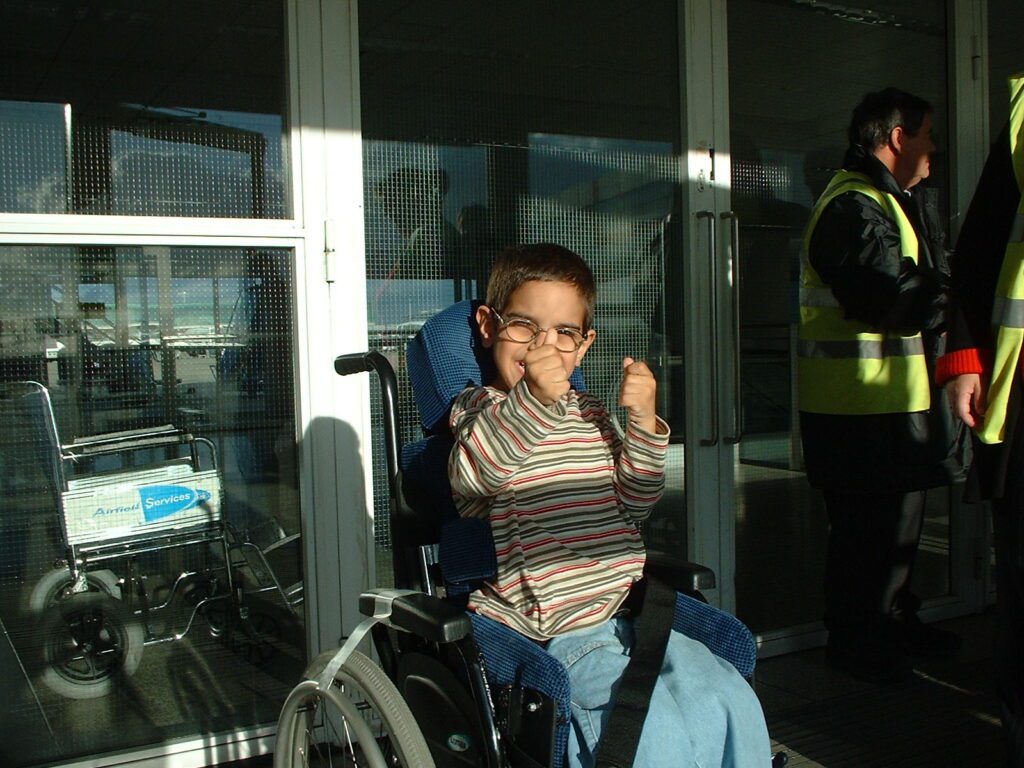
Moving and Handling for pupils in education
Introduction:
The moving and handling of pupils in both special education where learning disabilities may accompany physical disabilities or in mainstream schools requires a multi discipline approach to ensure both pupils and staff remain safe. Plus, pupils often require handling as part of therapy.
Cases of muscular skeletal disorders (MSD) amongst staff are usually because of repetition, poor posture due to poor ergonomics for example stooping over a changing table or a poor sitting posture whilst feeding a pupil. Research shows schoolteachers also experience high rates of MSDs (39–95% reporting symptoms like back, neck or upper-limb pain), often related to posture, workload and various school tasks.
The author with over 40 years’ experience in this sector has witnessed a substantial reduction in life changing injuries but frequently meets staff with MSD due to “cumulative” stress.
Legal & Policy Framework
Schools must comply with general health and safety law in the UK, especially:
Health and Safety at Work etc. Act 1974 – general duty to protect staff & pupils.
Manual Handling Operations Regulations (MHOR) 1992 – managing manual handling risks.
Provision and Use of Work Equipment Regulations (PUWER) 1998 – for aids like hoists.
Management of Health and Safety at Work regulations requiring risk assessments
Reporting & Equipment Regulations (RIDDOR / LOLER) also apply where relevant.
Failure to comply with either the Health and Safety at Work act or the above regulations constituting a criminal offence,
Equality Duty
Under the Equality Act 2010, schools must make “reasonable adjustments” to support pupils with disabilities — including in ways that allow safe movement and handling without discrimination.
Principles of Moving & Handling in Education
Risk Management Approach
Health & Safety Executive (HSE) guidance emphasises anticipatory risk assessment and planning to enable participation, not prohibit activities. Assessments should consider:
The pupil’s physical mobility, weight, co-operation ability and behaviour.
The environment (space, equipment, surface).
Staff capabilities, training and health conditions.
This approach helps balance pupil needs and rights with staff safety.
Common Handling Scenarios
Typical situations requiring special handling include:
Transfers (e.g., chair ⇄ wheelchair, seated ⇄ standing frames).
Toileting and intimate care (often involving leaning forward putting strain on the lower back)
Moving pupils after falls or in tight spaces like toilets.
Pushing/pulling wheelchairs and walking aids. (often requiring leaning forward putting strain on the lower back)
Good practice involves planning, using appropriate aids (e.g., slide sheets, hoists, turntables) and involving pupils in the process where possible. Also rotating staff so one or two staff are not exposed to fatigue e.g. when toileting at break times.
School Policies & Documentation
Schools should have formal moving & handling policies that:
Define responsibilities (senior leaders, SENCo, trained staff).
Require documented risk assessments for each pupil who needs moving/handling support.
Specify equipment provision and maintenance.
Set out training requirements and refresher intervals.
Include processes for reviewing practices and equipment.
Policies often sit alongside other SEN frameworks (e.g., individual care plans, EHCPs) and should be tailored to each pupil’s needs.
4. Training & Competence
Mandatory Training
Staff who support pupils with mobility or handling needs must receive appropriate training before undertaking these tasks, with regular refreshers. In many local authorities this includes:
Paediatric moving & handling training, including hoist use and transfers.
Load Risk Assessor training for those making formal assessments.
Competence Standards
The National Occupational Standards (NOS) for supporting teaching and learning include units on moving and handling individuals safely and respectfully.
Training should cover:
Correct techniques for assisting movement.
How to embed muscle memory
How to use equipment safely.
How to prepare environments for safe handling tasks.
Understanding and updating risk assessments.
Practical Tips for Schools
✔ Plan Ahead for Activities – do not improvise in the moment; ensure all equipment and staff are ready.
✔ Use Proper Aids – slide sheets, hoists, specialised chairs etc., reduce the risk of injury to pupils and staff.
✔ Involve Pupils & Carers – communication helps reduce “unpredictable” movements and informs safer handling choices.
✔ Record and Review – keep up-to-date profiles for pupils requiring handling support and revise plans as needs change.
✔ Include Training Records in school safety audits and staff appraisals.
6. Beyond Handling: Wider Context
While moving and handling covers physical support, special education health and safety also overlaps with other areas:
Managing behaviour (separate guidance on restraint / reasonable force applies).
Emergency evacuation planning for pupils with mobility needs. (PEEP)
Inclusive design of spaces and furniture.
HSE and government resources (including common-sense moving & handling guidance endorsed across the UK) support sensible implementation that does not needlessly restrict children’s participation.
Postural related risks
If there are issues relating to poor posture causing discomfort be aware that it could lead over time to injury. If there is an issue two risk assessment templates can be used to quantify the risk. These are called RULA (Rapid upper limb assessment) or REBA (Rapid entire body assessment) a search on the web will provide free to use templates.
If you want specific sample policies or risk assessment templates used by UK special schools, We can provide or help draft one tailored to your setting — just let us know!
Solutions have been providing moving and handling training to the special education sector for thirty-one years. This can either be by e learning, e learning then skills workshop for small groups via web cam for individual pupil needs, instructor led onsite or by us training one of your team to become an accredited Moving and Handling trainer/ risk assessor. Whatever your training need we have a solution that will meet your exacting needs.
FAQ’s
Q Must my school have access to a trained and competent moving and handling assessor?
A Yes either a staff member or by engaging a third party e.g. an OT or PT
Q Must each pupil who needs assisting require a handling plan to be in place?
A Yes unless the activity is considered to be trivial.
Q Can my staff physically lift and take all the weight of a pupil?
A There is no prohibition on this, but a detailed risk assessment will establish if this is safe or not.
Q Who specifies the moving and handling aids / hoist type required?
A A competent person